
Your employer brand is whatever your last hire says at a party
You can write the values. You don’t get to write the answer to “so, what’s it like there?”
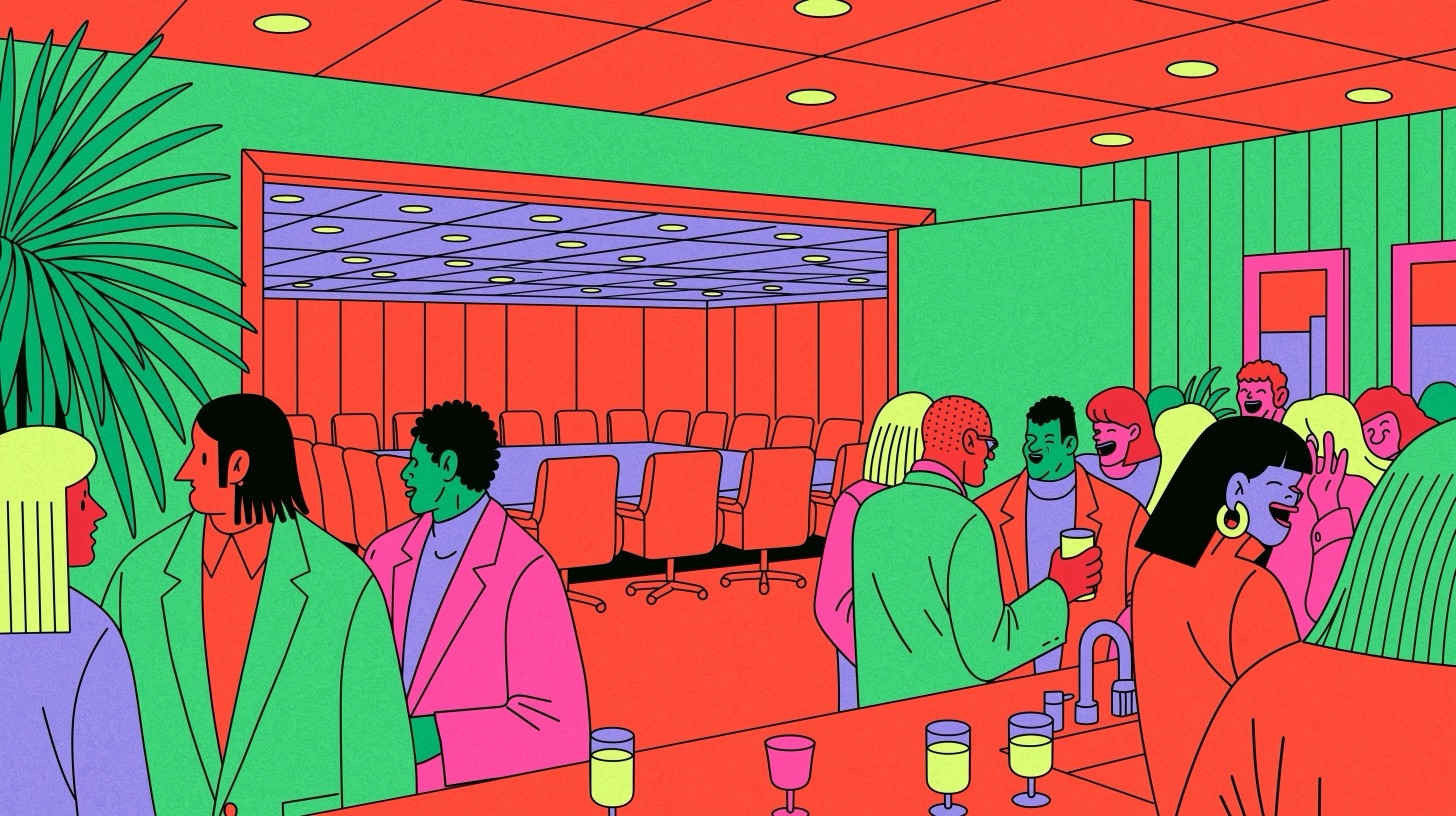
Someone you hired eight months ago is in a kitchen at a friend’s birthday, holding a drink, and gets asked the question. So what’s it like there? Whatever comes out of their mouth in the next ten seconds is your employer brand. Not the values on the wall. Not the careers page with the four smiling headshots. Not the recruitment film with the drone shot over the office.
Here is the uncomfortable version, stated plainly. An employer brand is not something you write. It is something you get found out for. Everything you publish about working at your company is a claim, and every person who has worked there is a witness. Candidates know how to weigh the two.
That does not mean the communication work is pointless. It means the communication work is downstream. A well-made careers site can carry a real reputation further and faster. It cannot manufacture one, and when it tries, the gap between the film and the first month is the only thing anyone remembers.
The decision is the message, whether you meant it as one or not
Most companies treat employer branding as a communications project. Brief an agency, run a survey, land on three words, roll out the templates. Meanwhile the things that actually set the reputation are being decided somewhere else entirely, in a budget meeting, in a policy update, in one founder’s answer to one awkward question.
Every one of those decisions is a message. You do not get to choose whether it gets broadcast. You only get to choose what it says.
On 26 April 2021, Basecamp’s co-founder and chief executive Jason Fried published a post titled Changes at Basecamp. Societal and political discussion would no longer happen on the company account. A set of benefits, including fitness and wellness allowances and education stipends, was converted to cash plus a profit-sharing plan. Committees were disbanded. Peer-feedback reviews were dropped.
By 30 April, four days later, TechCrunch reported that of a company employing around sixty people, roughly a third had accepted buyouts to leave. Other outlets covering the story reached the same count. Not one word of Basecamp’s employer branding copy changed that week. Its employer brand changed completely, because a policy had been set and then narrated, in public, by the people it applied to.
Whether the policy was right is a separate argument, and reasonable people took both sides at the time. The point that survives the argument is simpler: the decision did the talking. It always does.
Zappos ran the same experiment deliberately
In March 2015, Tony Hsieh sent Zappos staff a memo committing the company fully to holacracy, a management model with no conventional managers. Anyone who did not want to work that way was offered a package to leave.
By January 2016, Zappos chief operating officer Arun Rajan wrote that eighteen percent of the company, about 260 people, had gone since the March memo. Trade press reported the same figure at the time.
Read that as a failure and you miss what is interesting. Zappos made a decision specific enough that people could opt out of it, then let them. That is what a real employer brand looks like from the inside: a position clear enough to cost you somebody.
Here is the test buried in that. If nobody would ever leave over what you claim to stand for, you have not claimed anything. An employer value proposition that costs nothing to hold is not a proposition. It is a mood, and moods do not survive a probation period.
Timpson made a hiring policy do the work of a campaign
The UK service retailer Timpson has spent two decades making the same point in the opposite direction. Its foundation states that more than twelve percent of its 4,500 plus colleagues have a past criminal conviction, and that three quarters of the people it recruits from prison stay with the business long term. A 2024 UK government post on the King’s Awards put the share recruited directly from prison at around ten percent.
It has grown slowly and on purpose. A government release from January 2011 recorded a workforce of 2,400 including 89 colleagues who had trained in the company’s prison workshops. The policy was not announced as a brand platform. It was a recruitment decision, made and repeated until it became the most legible thing about the company.
Sitting underneath it is a management position that Timpson describes as upside down: head office is discouraged from issuing orders, and colleagues are trusted to run the shop the way they judge best. John Timpson’s own summary is that the best way to run a business is to trust your colleagues with the freedom to do the job the way they know best.
Nobody working there needs a poster to explain the culture. They have a story. Nobody repeats an adjective at a party. They repeat what happened to them, and what happened to somebody they know.
Why the gap opens in the first place
The gap is structural, not lazy. Employer brand usually reports into marketing or talent. The decisions that set it are made in finance, operations and the leadership team’s calendar. So one function writes the promise and another function writes the reality, and they rarely sit in the same review.
Then a candidate asks a friend of a friend what it is actually like. The promise describes an intention. The employee describes a Tuesday. The Tuesday wins, every time, because the employee was there.
James Ellis, who writes The Next Step on Substack, has argued that employer branding has done some of this damage to itself, by settling into tactics and tricks until leadership stops expecting anything strategic from it. That is his read, and it matches what we see. The work gets briefed as messaging when the useful version behaves much more like operations.
The exercise worth running this month
Skip the workshop. Ask your last five hires the party question, in those words, and write down the answers exactly as they say them, including the shrug. Then read your careers page next to them.
The distance between the two is your real brief. Not a copy brief. A decision brief, because closing it means changing something people can feel: what gets rewarded, who gets promoted, what happens when someone raises an awkward point in a meeting.
You do not get to write the sentence your last hire says at that party. You only get to earn it, and earning it is cheaper than the campaign you were about to commission.