
If your competitor could run your tagline, you don’t have one
The ten-second test that separates a real tagline from expensive furniture.
What makes a good tagline? Not cleverness. Not rhythm. A good tagline is a decision only your company could have made, compressed into a sentence only your company could say. Which gives you a test you can run on your own line in about ten seconds: could your closest competitor put it on their homepage tomorrow without anyone blinking? If the answer is yes, you don’t have a tagline. You have furniture. It fills the space under the logo and does nothing else.
Ask a room full of marketers to define a good line and you’ll get adjectives instead: punchy, memorable, ownable. The more useful stories are the ones that don’t appear in every deck. Here are three, and the uncomfortable thing they have in common.
The line that admitted defeat
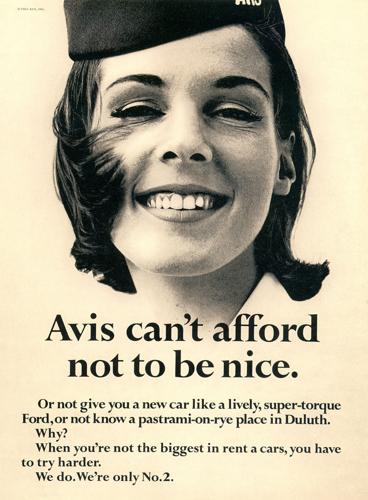
In 1962, Avis was a distant second to Hertz in the American rental car market and had not turned a profit in over a decade. The brief that went to Doyle Dane Bernbach produced one of the strangest opening moves in advertising: admit it. Copywriter Paula Green’s campaign said it plainly. “When you’re only No. 2, you try harder.” Within a year, Avis went from losing $3.2 million to earning $1.2 million.
Notice what the line actually is. It isn’t a claim about cars, counters or prices. It’s a public admission of market position, which is a decision, and a frightening one, that had to be made above the copywriter’s pay grade before the sentence could exist. And it passes the competitor test by construction: Hertz could not run that line. The market leader is structurally incapable of saying it.
A fair objection: this was campaign copy, not a tagline carved above the door, and Avis did eventually retire it in 2012. Both things are true, and neither weakens the point. A line born in a single campaign stayed up for fifty years, which is longer than most “permanent” taglines survive their first change of CMO. Campaign line or tagline, the label matters less than the lifespan, and the lifespan came from the decision underneath, not the words on top.
A policy with a sentence attached
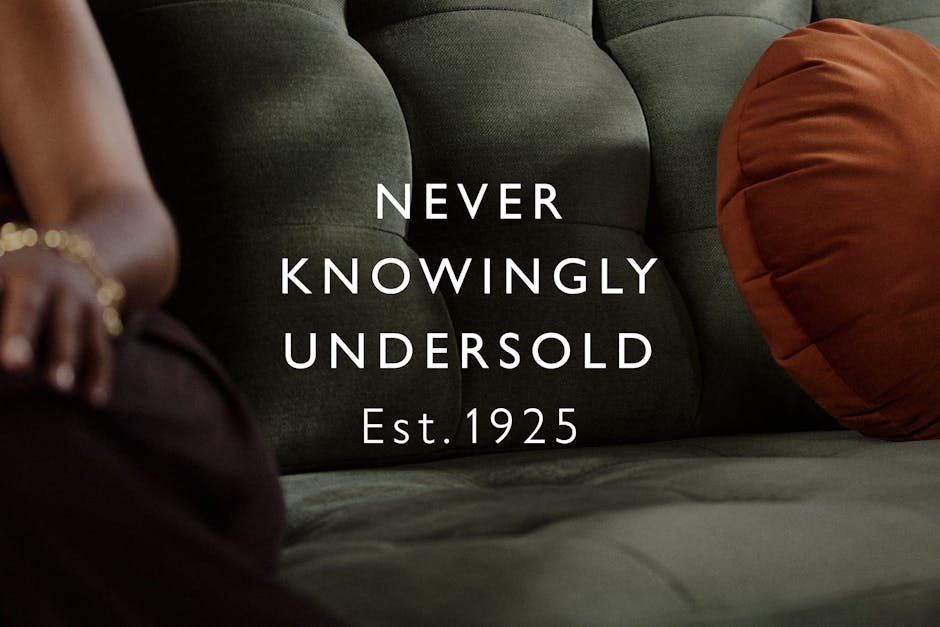
The most durable line in British retail was never really a line at all. John Lewis adopted “Never Knowingly Undersold” in 1925, and for ninety-seven years it wasn’t copy, it was a refund policy. Find the same product cheaper elsewhere and the store paid you the difference. The words had a price attached, every single day, in actual money.
That’s also why it had to go. In 2022, John Lewis retired the promise because price-matching had become unaffordable against online competition. The words still scanned beautifully. The decision behind them had become unpayable, so the line went with it. And when the company brought it back in September 2024, it didn’t return as nostalgia: it came back with a rebuilt mechanism, price-matching 25 named retailers, in-store and online. The lesson sits in plain sight. The words were never the asset. The decision was, and the words were only ever its receipt.
The line that installed a belief
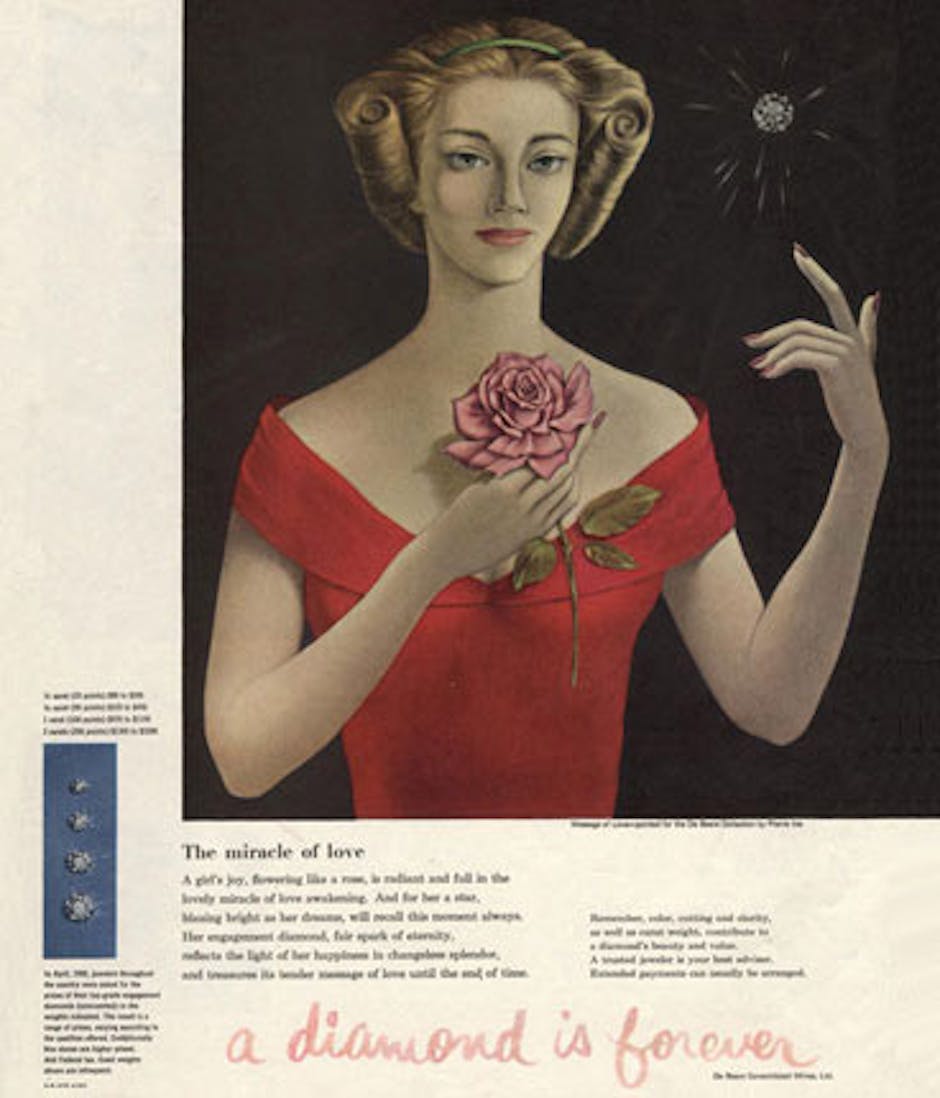
De Beers’ “A Diamond Is Forever” has run since 1947, when copywriter Frances Gerety wrote it at N.W. Ayer. It isn’t a description of a diamond. It’s a claim about permanence that only works once you believe a diamond is the object you mark a permanent commitment with, which is precisely the belief the campaign existed to install. The line and the strategy are the same decision, said twice. No competitor could borrow it, because borrowing it would mean borrowing the entire worldview underneath it.
The line that told half the market to leave
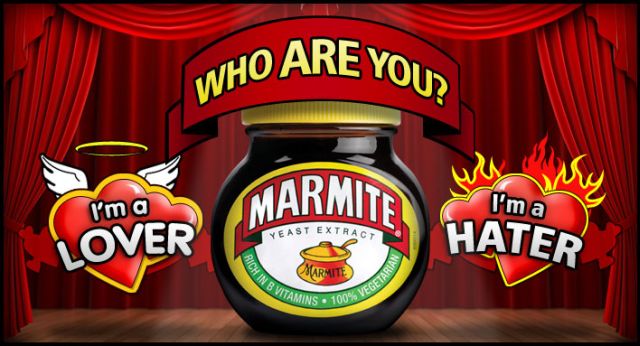
In October 1996, a young creative team at BMP DDB, Richard Flintham and Andy McLeod, gave Marmite a line that no research group would ever have approved: you either love it or hate it. A food brand put “half of you will find this revolting” into its own advertising, and kept it there. Thirty years on, it’s still the operating system for everything Marmite does.
This is the decision most companies find genuinely impossible: deciding who you are not for, out loud. Marmite’s line works because it’s true, everyone already knew it was true, and saying it first turned a product weakness into the most distinctive verbal asset in the category. Your brand almost certainly has an equivalent truth. The question is whether anyone in the building is allowed to say it.
Why the safe line always wins the room
Nobody in a meeting objects to a tagline that offends no one. That’s exactly the problem. The lines that survive internal approval are usually the ones with no edges left, because edges are what get negotiated out in review. What remains is warm, vague and interchangeable. It reads fine in the deck and says nothing in the world.
Look at the three stories above and notice that every one of them would have died in an average approval chain. Admitting you’re second. Promising to pay customers money. Telling half the market to walk away. Each line survived because someone senior decided the uncomfortable thing first and the words merely reported it. A tagline with a real point of view will always make somebody in the room flinch. If nobody flinched at yours, that’s worth noticing.
What to decide before you write a single line
Skip the wordsmithing until you can answer three questions in plain sentences: what do we believe that a competitor doesn’t, who are we willing to not be for, and what would we still say if it stopped being convenient. Avis answered the first. Marmite answered the second. John Lewis answered the third for ninety-seven years, and had the honesty to retire the line when the answer changed.
Write the answers in full sentences first. The tagline isn’t a new idea on top of that. It’s the same idea, compressed until only the belief is left standing. Do the words after. Skip the decision, and you’ll be back in a workshop in eighteen months, paying someone to make a different arrangement of the same nothing sound resolved.
Most taglines are just well-lit billboards
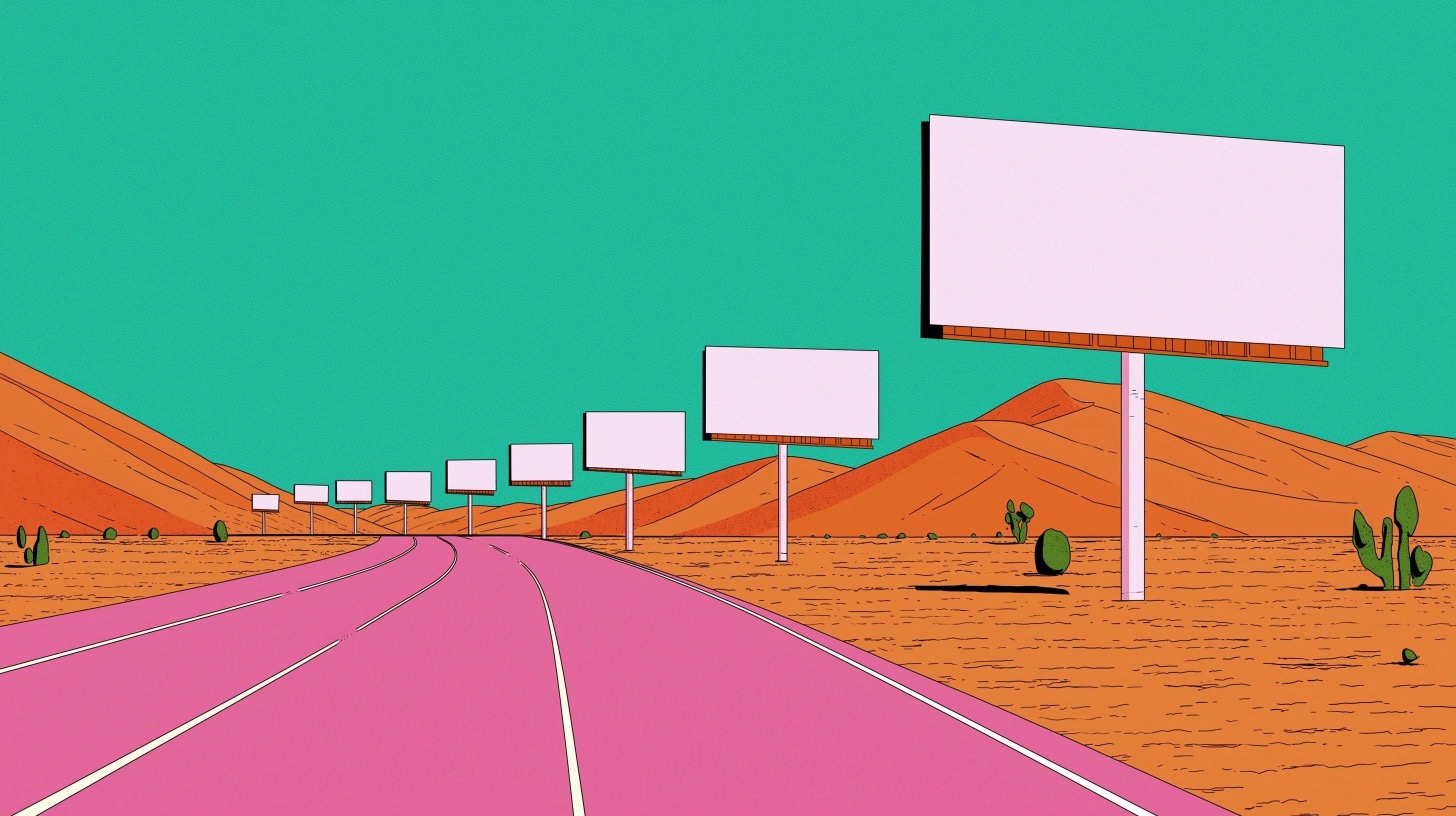
Drive past enough of them and they blur into a single message: nothing in particular, said confidently. That’s the real cost of skipping the decision. Not that the line is bad, most of them are competently written, but that it disappears into the row of identical boards beside it. Nobody remembers the eleventh billboard. They remember the one that said something only that company could say.
You already know which kind you’re running. If you had to guess right now whether your line would survive the competitor test, you probably wouldn’t need to guess. That instinct is usually correct, and it’s usually the first sign that the decision was never made, only the sentence was. Fix the decision and the sentence takes care of itself. A tagline was never the deliverable. It’s proof that somewhere upstream, someone decided what the company believes, accepted what it would cost, and had the nerve to leave the rest out. Everything else is just a well-lit board on an empty highway, waiting for someone to notice it says nothing at all.
Campaign imagery remains the property of the respective brands and agencies, shown here as editorial reference with credit.